Minerals Introduction
Unlike the mineral rich provinces in the rest of South Africa, the Eastern Cape it not well endowed with large, valuable mineral deposits. This is largely a function of the geology of the province. In particular the age of the rocks and strata are much younger than in provinces to the north. Not-withstanding, several mineral deposits are located in the province, but these remain largely undeveloped and unexploited. Most of these are not precious metal deposits, rather they are industrial mineral related. Mineral deposits that show promise are: stone quarrying (for export), industrial minerals related to the building industry, such as sand, aggregate, limestone and heavy mineral sands.
Within the Eastern there are diverse mining operations for the extraction of a range of mineral products including lime, gypsum as well as sand and stone quarries for construction materials.
Carbonates
There is extensive mining of carbonates in the Grassridge area, between Coega and Barkly Bridge in the Sunday’s River Valley.
The quarry produces limestone for the cement factory, located at New Brighton in Port Elizabeth. This traffic is railed daily on three ten wagon shuttle trains. The cement factory was previously supplied with limestone from the Patentie area, above the Gamtoos River Valley but this supply has been superseded by the new source.
Dolerite
Exploitation of dolerite is being considered in the Komgha area, west of the Kei River. A mining license has been applied for and the outcome is expected in the near future. Geological excavations at the site have found that the areas underlying geology was of sufficient quality to sustain a mine.
Gypsum
Gypsum is mined in the Mount Stewart area, south of Klipplaat. It is a hydrated from of calcium supphate and is found in the Cretaceous beds which extend from Oudtshoorn through Uniondale to near Uitenhage. It is used in cement production and a quarry near Mount Stewart supplies this product to the Port Elizabeth factory.
Kaolin
Kaolin is a soft clay type material and is mined in the Western and Eastern Cape. Known also as “China Clay”, the Eastern Cape deposits are found in the Grahamstown area, north of the town on the Bedford road. They are considered to be the largest deposits of their type in the country.
Stone and aggregates
During 2005, production of sand and aggregate in South Africa increased by 5,5 percent to 49 970kt in relation to 47 382kt produced in 2004. Local sales value also increased by 6,6 percent to R2 222 million, with a unit value increase of 2,5 percent to R40/t (Table 1). There has been a continuous increase in demand for sand and aggregate since 2001, accounting for the numerous new entrants, particularly in the Eastern Cape, Western Cape and Kwazulu Natal. This trend clearly indicates a strengthening in domestic infrastructural activity, especially in the construction and road maintenance, rail, air, and harbour transport services, also water and energy capture and distribution, as well as domestic, industrial, and commercial building and construction.
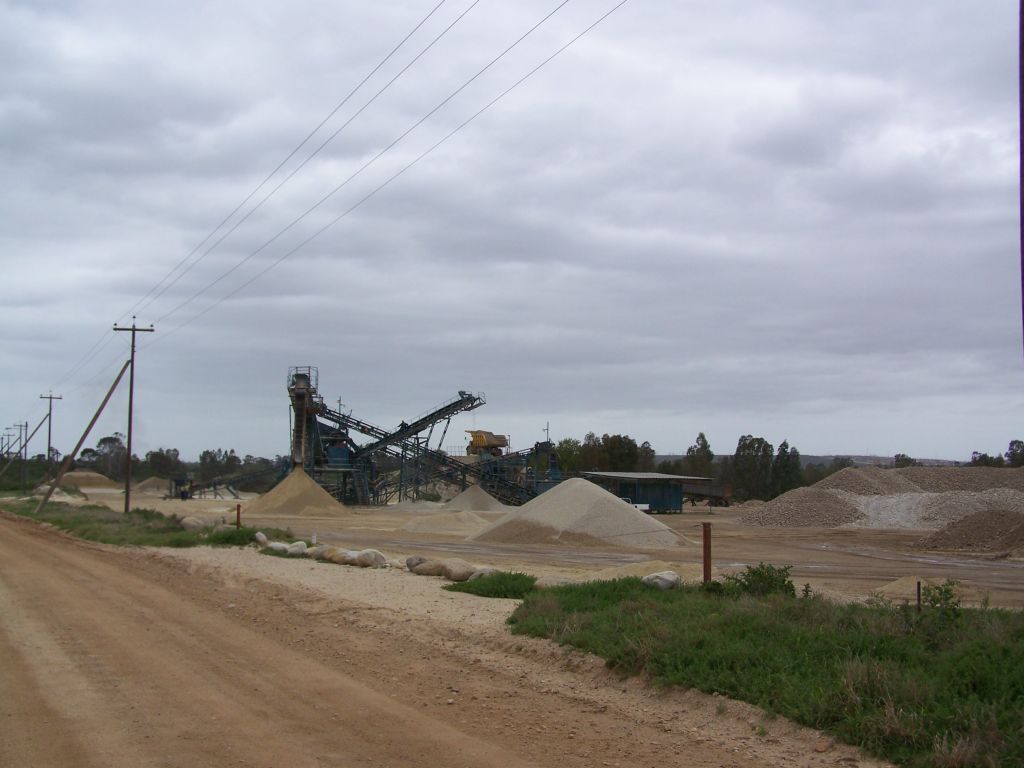
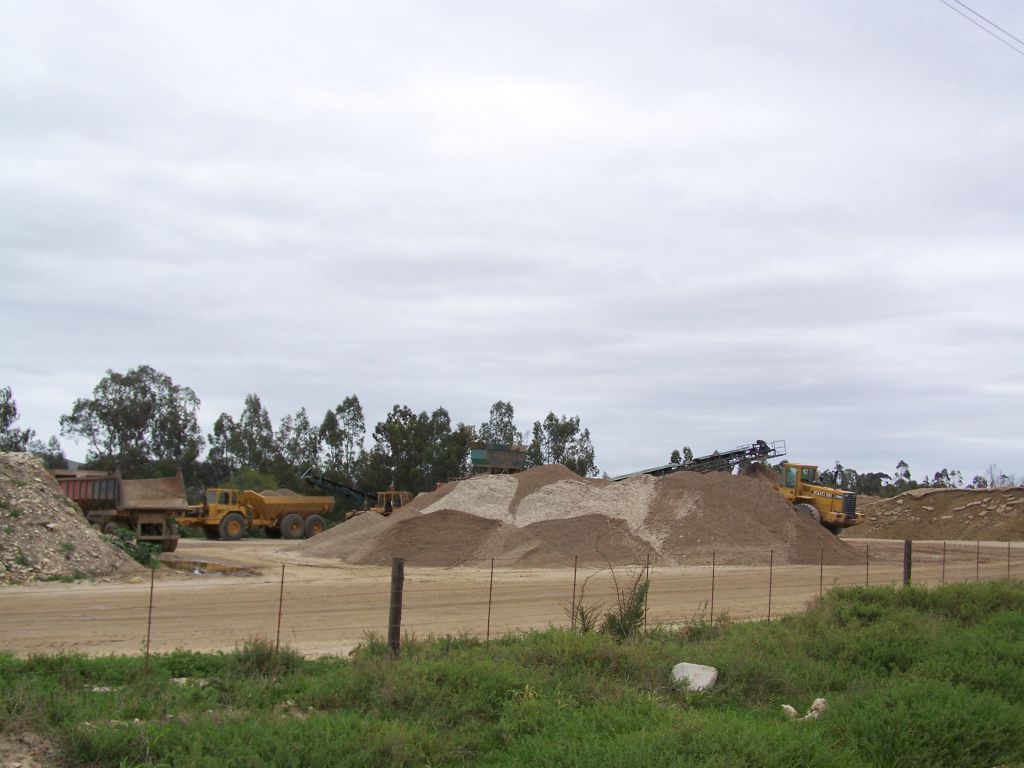
The mining and quarrying of building, construction and road maintenance materials takes place at a wide range of sites in the Eastern Cape including Cradock where a large quarry produces ballast for railway use. Numerous small quarries have mined stone aggregate for construction purposes in the Port Elizabeth, Cradock, Aliwal North, Cathcart, Humansdorp, Stutterheim and Cambridge areas. The source of material is usually either dolerite intrusives or quartzites. It is estimated that 40 million m³ of sand and 7, 5 million tons of aggregate will be moved during the construction of the Ngqura Harbour. There are numerous sand and aggregate quarries all scattered throughout the province and the output tonnages varies from region to region. The sand and aggregate quarry in Cotswold (P.E) produces approximately 11 000 tons per month. Another company operating in the area produces approximately 237 000 tons of sand and course stone annually at its 4 sites. It can be assumed that over 500 000 tons of sand and aggregate is mined in the P.E-Uitenhage.
Transport
The transportation of minerals in the Eastern Cape is predominantly done by road. The vehicle configuration varies depending on the distance travelled. Local deliveries will either vary from light 1 ton delivery vehicles to articulated bulk tippers. In 2005/06 a t otal of 1,829,675 tons of manganese ore was railed to the port of Port Elizabeth for export. For the same year the port exported 2,027,357 tons of mangese ore, which indicated that approximately 200 000 tons was transported by road.
Quarry near Despatch
|