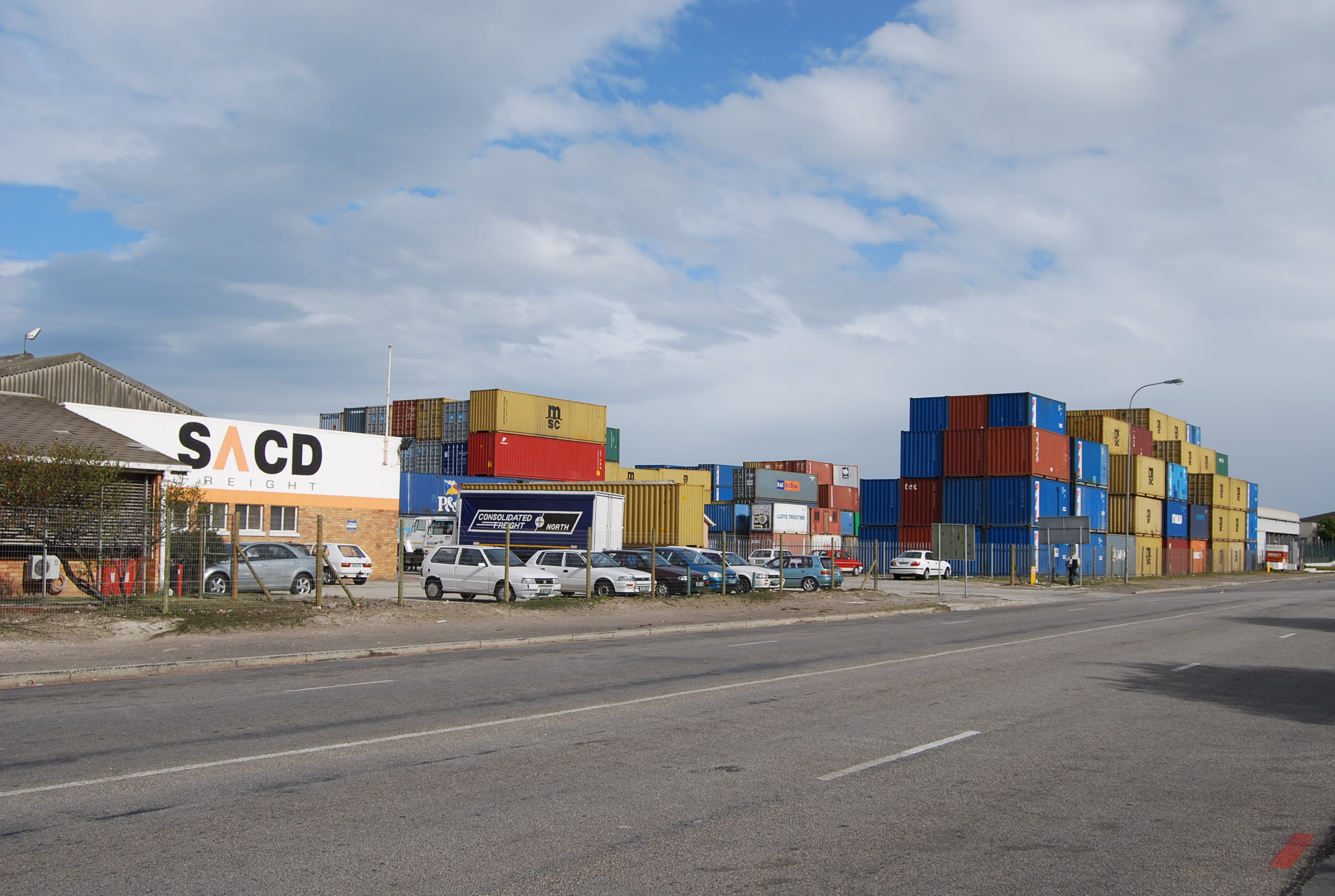
Marshalling Yards, Locomotive & Related Facilities There are several important marshalling yards in the Eastern Cape. The most important are described briefly below: Railway Yards New Brighton(Port Elizabeth) This is the main yard for trains in and out of Port Elizabeth, with the exception of export manganese trains which run directly to the harbour area. Likewise, Auto trains to and from Aloes stop short of Swartkops. Auto trains running to Uitenhage must enter the New Brighton yard, where they reverse direction and run to Swartkops and Uitenhage. Limestone traffic from Grassridge is received in the yard, from where wagons are shunted to the nearby private siding of the cement company. Photo: Private container depots adjacent to the New Brighton yard
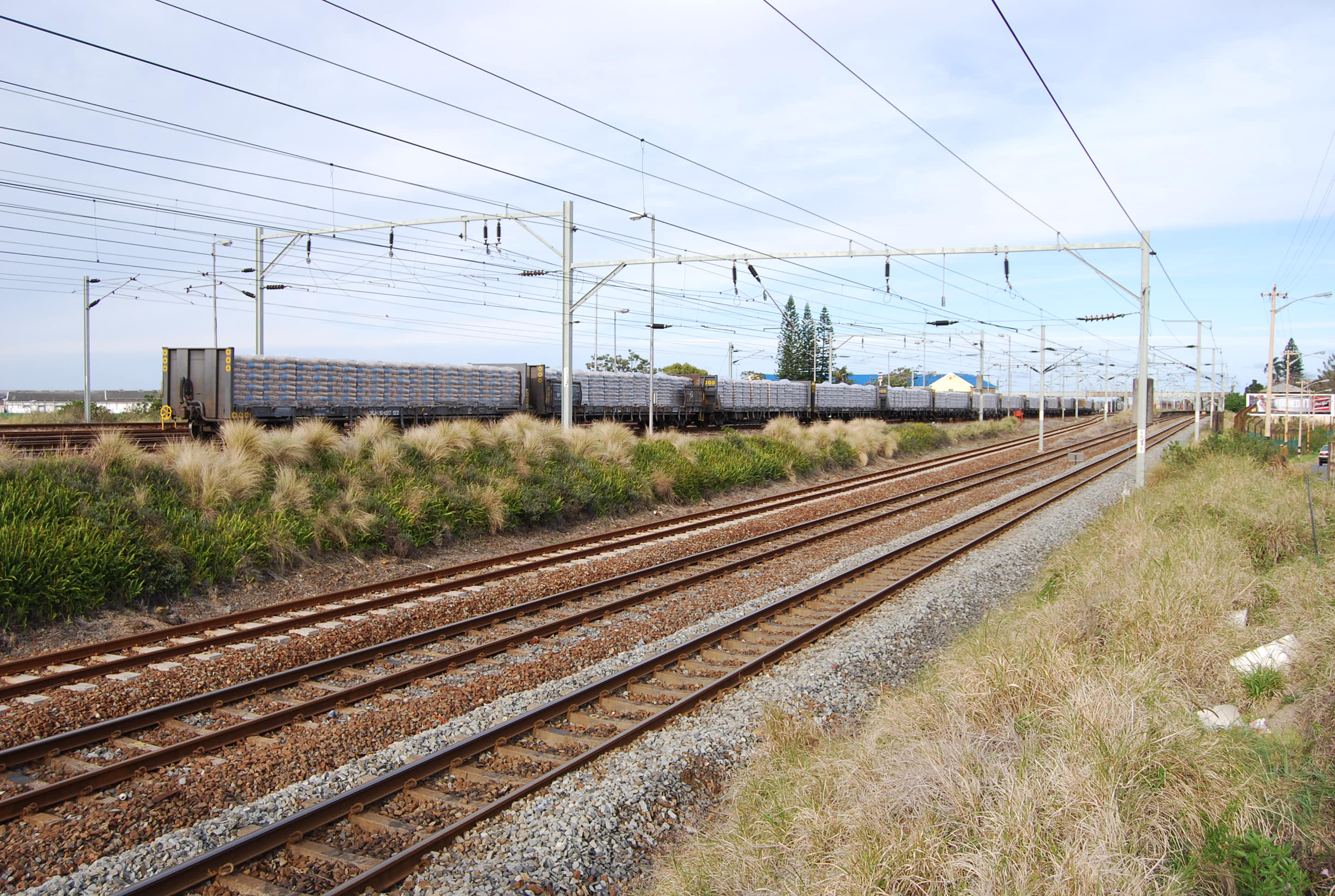
Noupoort The large yard at Noupoort is hardly used at this time. In former years it was very busy and was used to shunt and consolidate through traffic from the Free State main line and the Cape Midlands mainline. Cambridge(East London) Mainline traffic is made-up at this yard from where the harbour access line runs down to the port. Other traffic to and from the Cambridge industrial area is shunted from this yard. The adjacent locomotive shed and workshop area provides maintenance services as required. Photo: Block load of shrink-wrapped palletised cement at Cambridge
Queenstown The Queenstown railway yard and locomotive shed area is located south of the station and is used mainly for local traffic consisting of cement and grains. In the past, when the branch lines to Tarkastad and Qamata operated, and large volumes of general freight traffic to local private siding owners was on rail it was a busy marshalling yard. Today, with the exception of received traffic, virtually all trains run with block loads and bypass the yard altogether. Burgersdorp Burgersdorp has a small yard which is used to marshall wagons for the Aliwal North line. As with many other yards countrywide its importance has diminished as general freight traffic has shifted to road. |