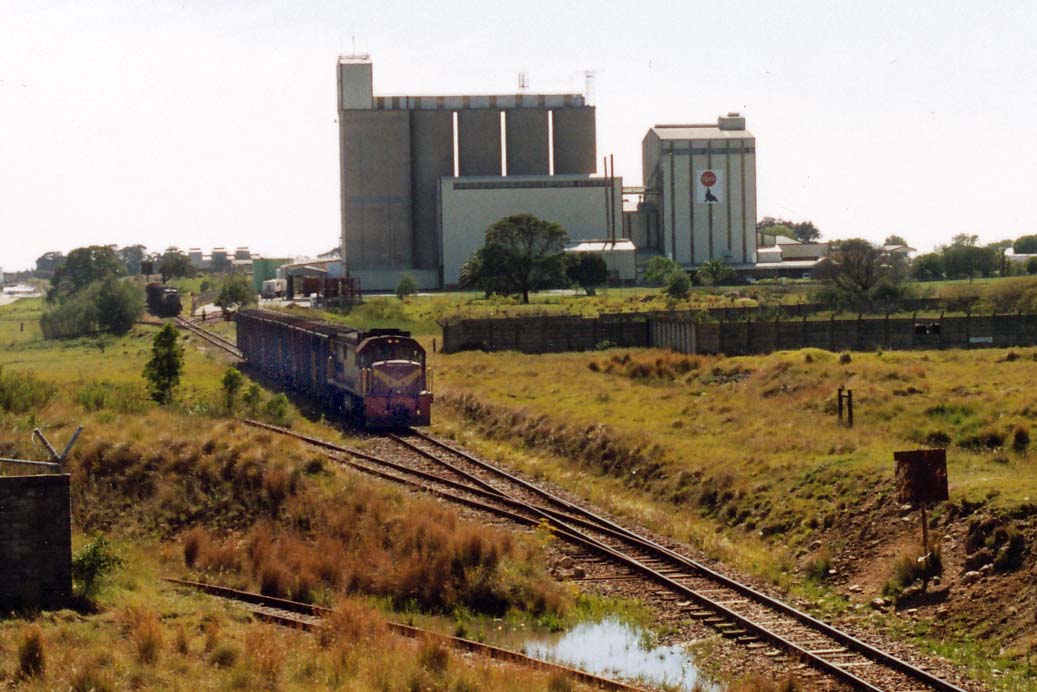
Industrial Areas & Main Rail Users Private sidings are considered essential to provide door-to-door services for rail traffic. Unfortunately, in recent years many have been closed as former users switched to road transport. This came about after transport deregulation in the late 1980’s and when the railway administration discouraged wagon-load traffic. Access lines in various urban areas have usually been constructed, owned and maintained by the municipalities, while private sidings themselves were constructed and maintained by the owners. Many private sidings in these areas are no longer used and many have been uplifted. For example, in the former Cape Midland Region, encompassing Port Elizabeth, Patensie, the Kirkwood area, Grahamstown and Cradock, a 2008 census revealed that there were 49 private sidings, of which 34 were in use. In actual fact, there were more, possibly 60 to 70 in total, but these had been closed or had been uplifted. For example, in the old North End area, several private sidings served various industries but these are no longer in use and most have been uplifted. In the East London area including Cambridge and Arnoldton there were over 20 private sidings but only four are currently in use. Of these in the West Bank industrial area, three served liquid fuel companies one the major grain export/import silo area and another a brewer warehouse. In Cambridge, an important cement distribution company has a major rail receiving facility. Industrial townships which have rail access lines are described in the list which follows, while the names of rural stations which serve private sidings are detailed alphabetically. Aloes Industrial (Port Elizabeth) Situated between Swartkops and Coega, this industrial township was established during the late 1960’s when a major international locomotive supplier established a manufacturing and assembly plant in the area. Prior to this, two service branches rand from near Aloe station to Coega Kop and the Swartkop salt pan. The industrial area itself was expanded and eventually contained some 10 km of access lines. With the decline of general freight traffic many private sidings in the township have fallen into disuse but a large motor manufacturing company continues to use rail transport and motor vehicles are regularly loaded and consolidated into trains destined for the interior. Arnoldton (East London) Located between Dawn and Arnoldton stations, this industrial township is served by a single access line some 5 km in length. A number of short spur lines served private siding owners in the past. At present, there are no rail users but the lines are largely intact. Berlin Industrial An important animal feed company is the main user of rail in this small industrial township. Photo: Train shunting at grain silo facility in Berlin Industrial area
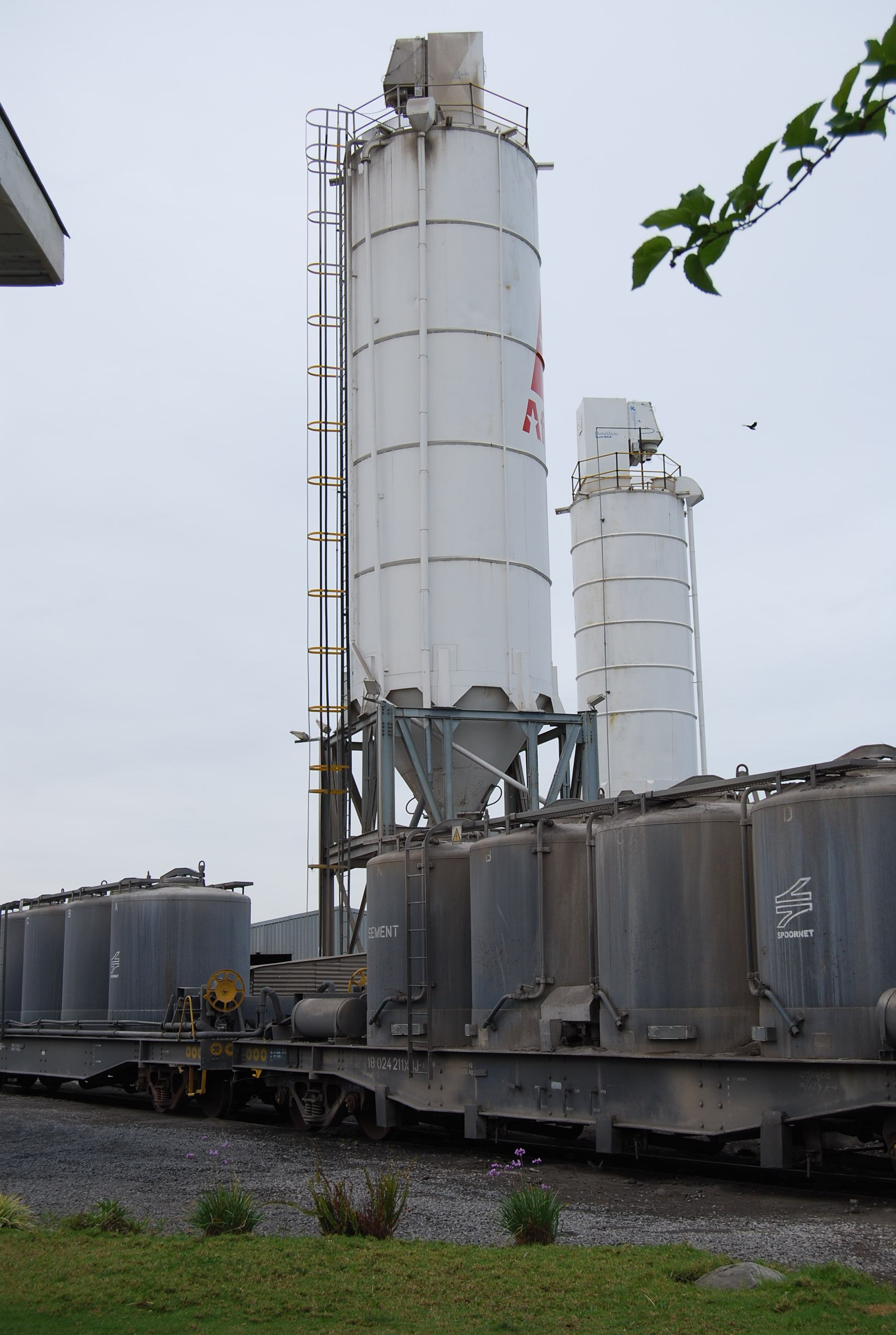
Chiselhurst (East London) An old industrial area in the East London area, currently servicing one major user, a cement distribution company which received bulk and bagged products from the Northern Cape. A number of private siding owners, including a major blanket company, are no longer in operation but service lines are still intact. Photo: Bulk storage facility at Chiselhurst cement depot
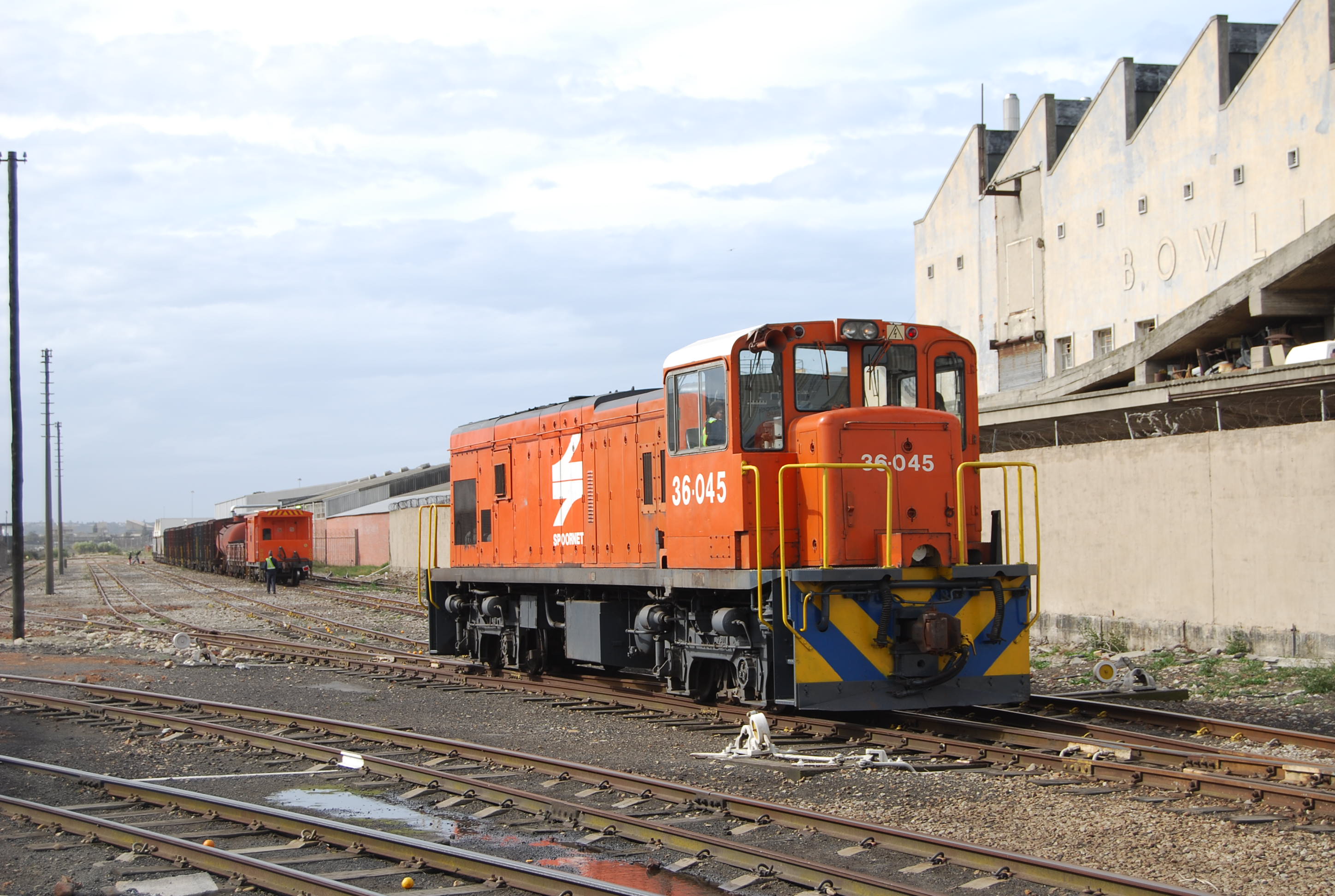
Deal Party Industrial(Port Elizabeth) A major industrial area adjacent to New Brighton yard, to the north of the Port Elizabeth CB. It contains some 10 kilometres of access lines serving several private siding owners including a fruit processing plant that receives non-export oranges from the Kirkwood line which are processed into fruit juice. There is also an important food processor that receives wheat. During 2005 – 2006 over 92 000 tons was imported via Algoa Bay and about 10 000 tons sourced from domestic producers. Another grain milling company received over 48 000 tons of maize of which about 12 000 tons was imported through Algoa Bay. A chemical factory received over 4 000 tons of caustic soda during the review period. The Deal Party industrial township is adjacent to the Deal Party container terminal, still used by TFR although the former PX sheds are now leased to private-sector freight forwarders. Photo: Train shunting in Deal Party area
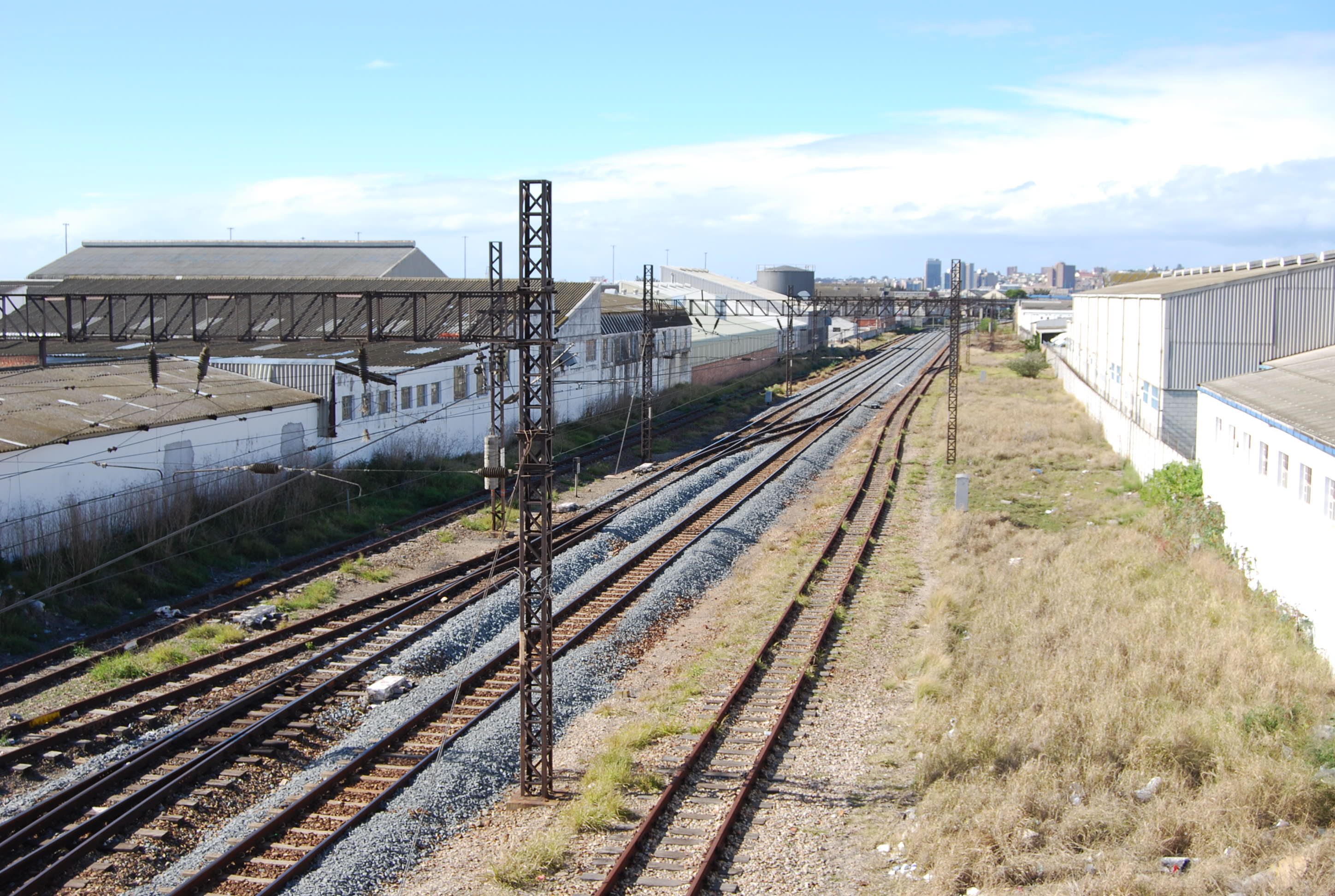
Fort Jackson A former ‘border’ industrial area, situated adjacent to the large Mdantsane township. There are several kilometres of access lines in the area but with the decline in the local textile industry and the loss of state subsidies, activity declined, affecting rail traffic. One company operating a bakery is currently using a private siding and other factories are rail served. Motivation should be made to take advantage of the rail access, but until the railway administration reconsiders its view of wagon-load traffic, it is unlikely that rail traffic will be generated. Neave Industrial(Port Elizabeth) A very old industrial township, situated in the Korsten area. Access is by way of Sydenham station and there are several kilometres of municipal lines which at one time served various private siding owners. There are no current users, although most rail track is intact. North End (Port Elizabeth) Located adjacent to and on both sides of the railway line from Port Elizabeth station at North End to Sydenham. Several factories had rail sidings served by access line on either side of the main line but none of these are presently in use Photo: Railway lines at Sydenham
Redhouse A relatively new industrial development area served by rail lines from Swartkops and situated near the large Zwide township. The major user is a large brewery which brings in malt by rail and loads beer for transport to East London. There are a number of other private siding owners who do not use rail at this time. Photo: Modern private siding at Redhouse industrial township
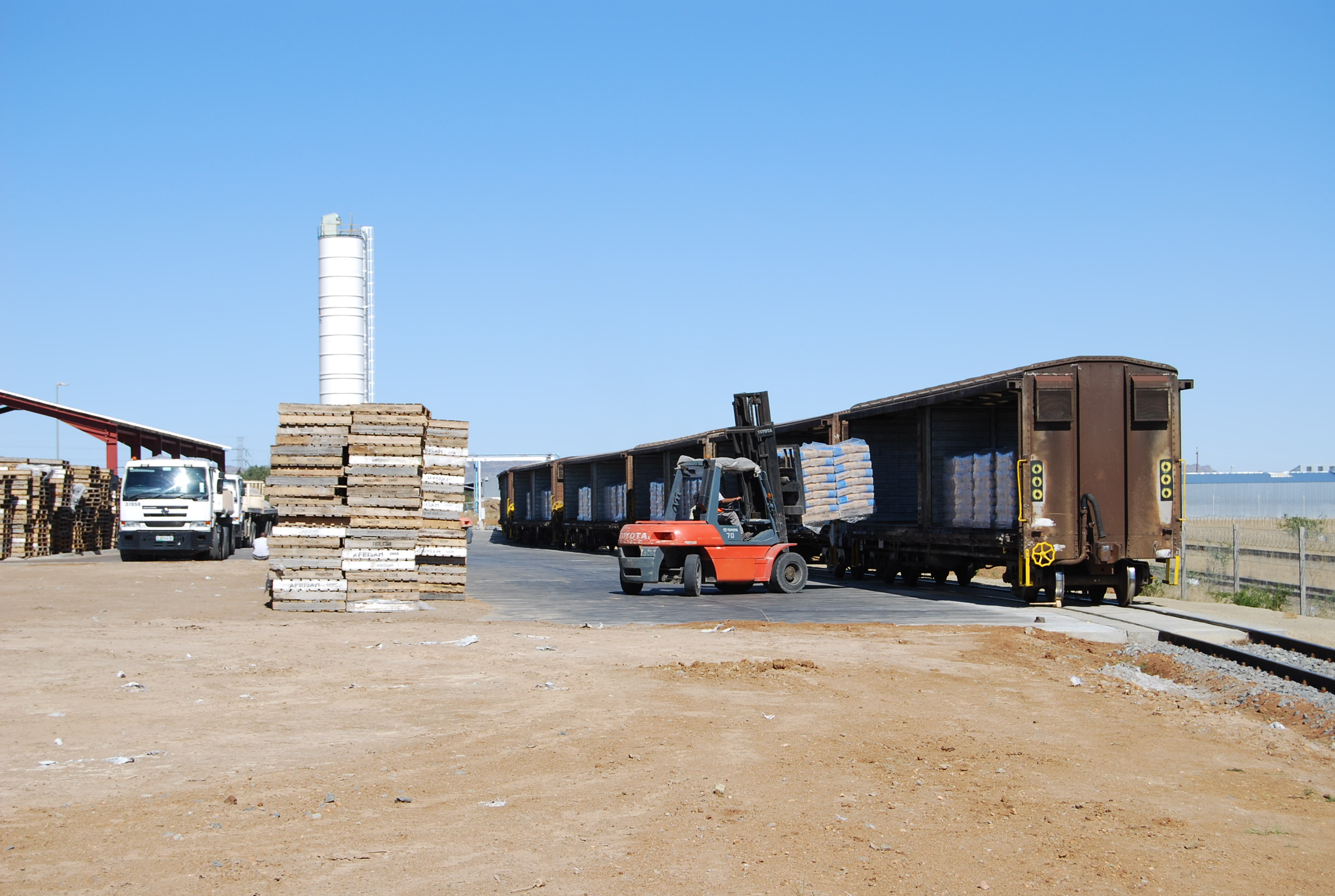
Queendustria (Queenstown) A new industrial area south of Queenstown. There are several established industries in the area but only one is currently using rail. This is a major cement manufacturing and distribution company who uses rail to bring block-loads from the Northern Cape. Distribution to points as far as Mthatha (Umtata and Grahamstown is by road. Photo: New cement distribution depot in Queenstown. Front-end loader off-loading palletised cement
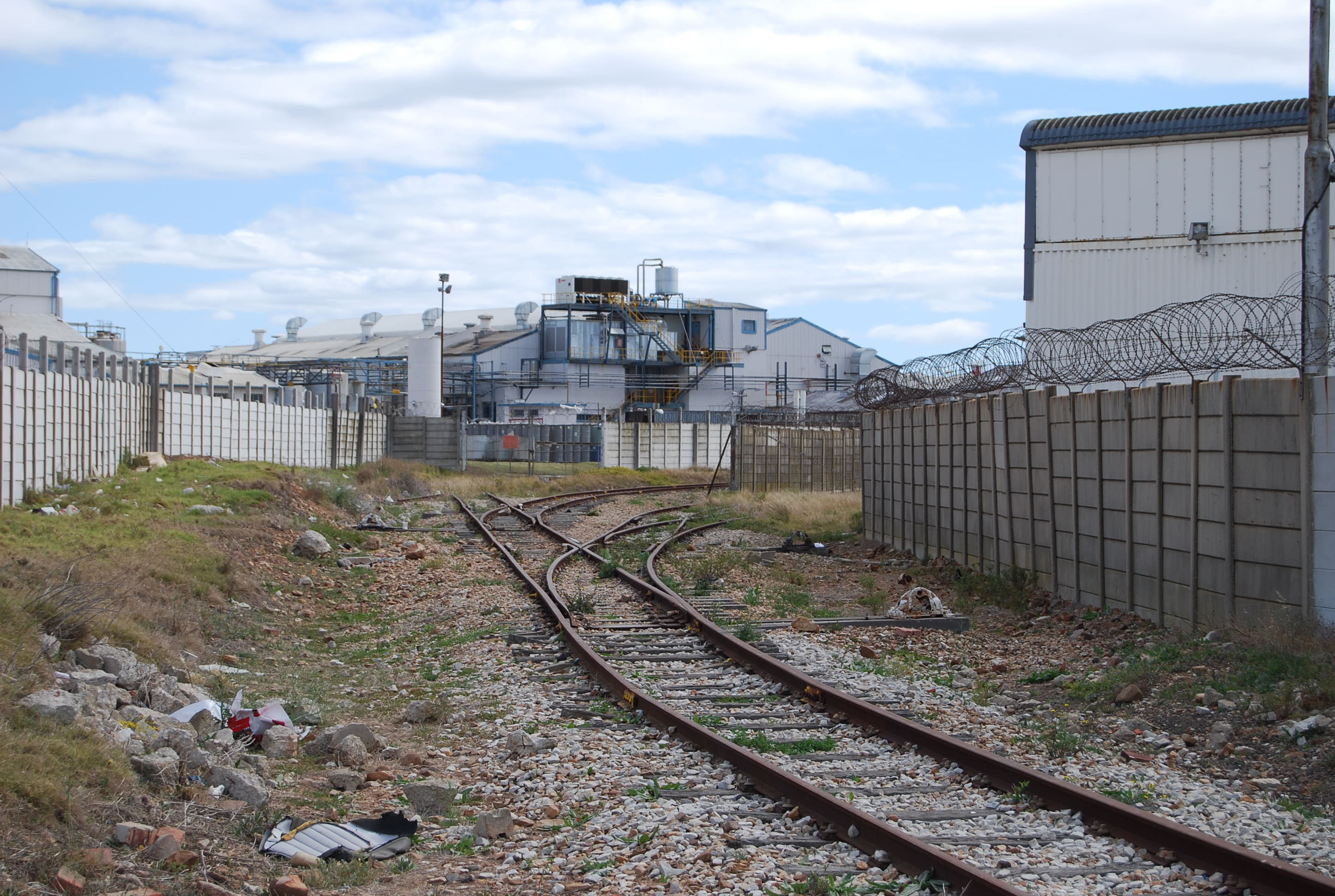
Struandale Industrial (Port Elizabeth) A nine kilometre municipal access line serves this industrial township which is situated adjacent to the R75 Port Elizabeth – Uitenhage road. It runs from the New Brighton railway yard and serves the local cement company, and a gas company which mainly receives supplies from the large refinery near Mossel Bay. There are several private siding owners at the far end of the line near KwaZakhele but none are currently using rail. Photo: Cluster of disused private sidings at Struandale
West Bank(East London)
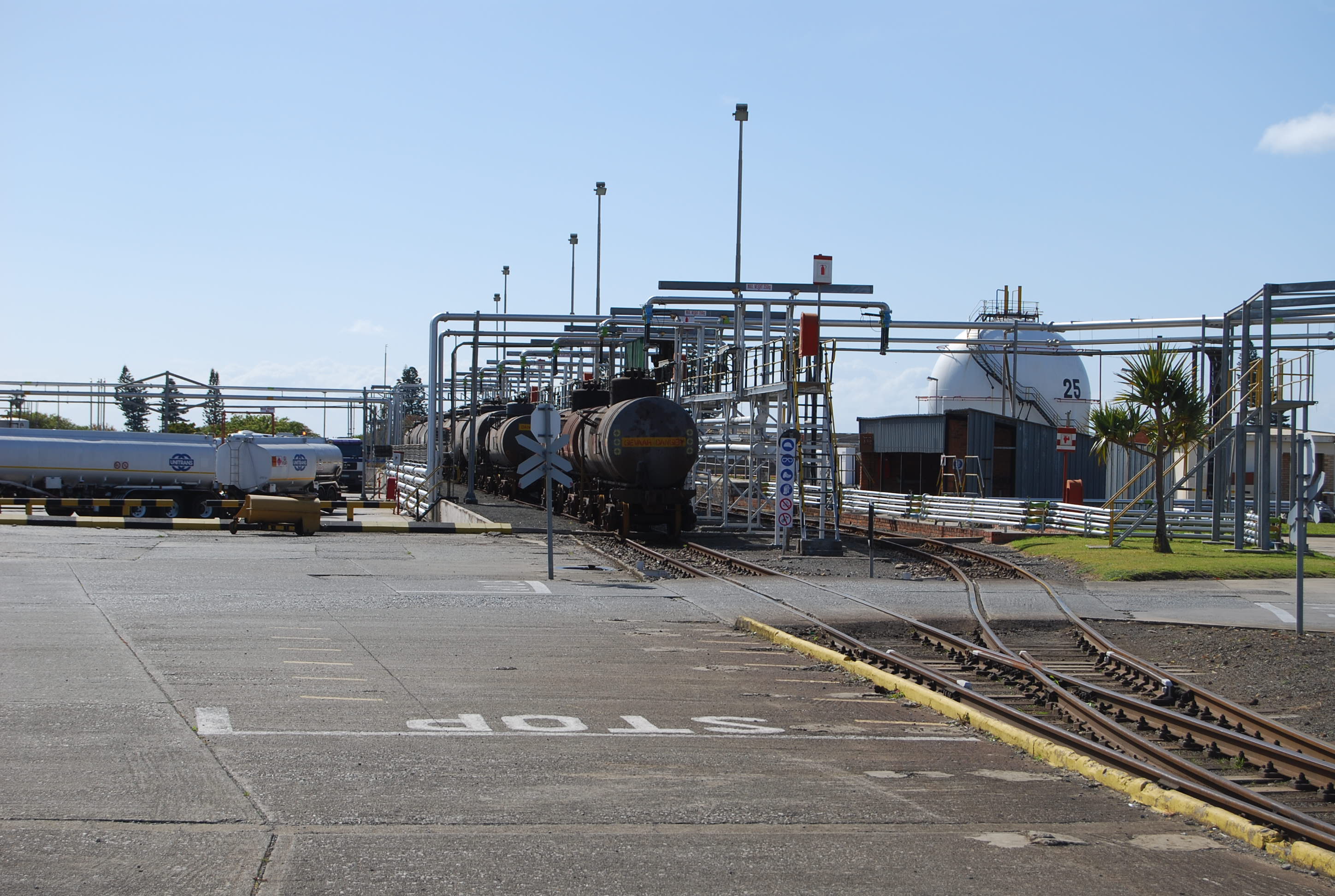
A long established industrial area on the south (or west) bank of the Buffalo River and near the harbour area. It serves the liquid fuel companies, a major brewery and the export grain silo complex. Access to the main line is by way of the original harbour line running from East London station, and the newer access line running from Cambridge. There are about five route kilometres of service lines serving several private siding owners. Photo: Liquid fuel depot in East London
|