Historical DevelopmentRailway services were first introduced in the present-day Eastern Cape when the Port Elizabeth – Addo section was opened on 26 July 1975. A branch from Swartkops to Uitenhage was opened later in the same year. The plan at the time was to open the Uitenhage branch to Graaff Reinet and extend the Addo line inland to eventually reach the Kimberley area.
Alicedale was reached in 1877 and two years later the line was extended northwards to Commadagga. At the same time, it had been decided to construct a branch to Grahamstown and this was reached on 3 September 1879. The mainline north reached Cookhouse in 1880, Cradock in 1881 and Colesburg in 1883. A line was then constructed from Noupoort to De Aar and opened in 1884, the same year the line from Cape Town reached De Aar. Kimberley was reached in 1885 while the line from Colesburg to Bloemfontein was opened in 1890 and the final link to Germiston was opened in 1892. The main line from Lourenco Marques (now Maputo) to Pretoria and Germiston was opened in 1894 while the main line from Durban reached Germiston in 1895, thus completing the first stage of the future main line system of South Africa.
Meanwhile, a railway was opened from East London to Blaney and King Williams Town in 1877. This was then extended from Blaney to Queenstown in 1880 and Burgersdorp in 1885. The final link to connect with the Free State main line was opened at Springfontein in 1892, the same year that an alternative line from Stormberg to Rosmead on the Port Elizabeth main line was opened. This provided a short cut for traffic to and from De Aar.
The early line from Port Elizabeth (Swartkops) to Uitenhage was extended to Klipplaat and Graaff Reinet in 1879. From here the line was extended northwards to Middelburg which was reached in 1891, thus forming an alternative route to the main line. Another line was extended westwards from Klipplaat to Willowmore in 1902, reaching Oudtshoorn in 1904. This line eventually connected with the line from Worcester to George in the Western Cape after the construction of a line over Montagu Pass completed a through route in 1913.
Another connecting route between Port Elizabeth and East London, running via Cookhouse, King Williams Town and Blaney was opened in 1903. Several branch lines were opened in this period. The first was the branch from Sterkstroom to Indwe, opened in 1900 to serve the Cape Coalfields. This branch was later extended to Maclear in 1906. Another notable branch was opened between Amabele and Komgha in 1904. The extension to Butterworth, opened in 1906, traversing the famous Kei Cuttings. Mthatha (Umtata ) was reached in 1916. This branch is of special interest, having been re-opened by the Eastern Cape Government in 2007, after having been closed by the national railway operator some years earlier.
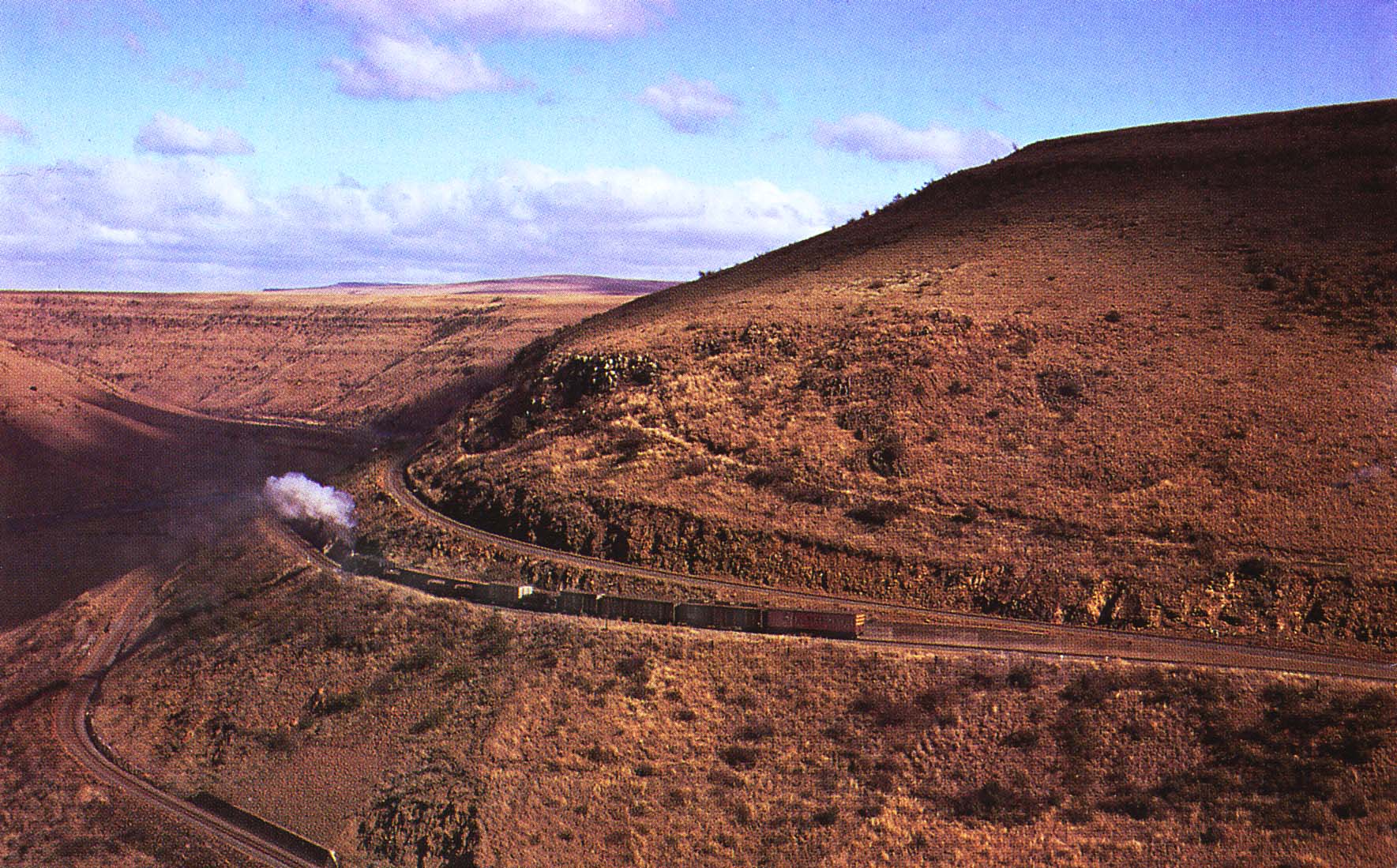
A very unusual branch is the line between Aliwal North and Barkly East. Opened to Lady Grey in 1905, it was extended to Motkop in 1912 on a route that included six reversing stations because of the mountainous terrain. It was later extended to Barkly East in 1930, over a section that included two additional reverses.
Photo: Train being propelled between 8th and 7th reverse
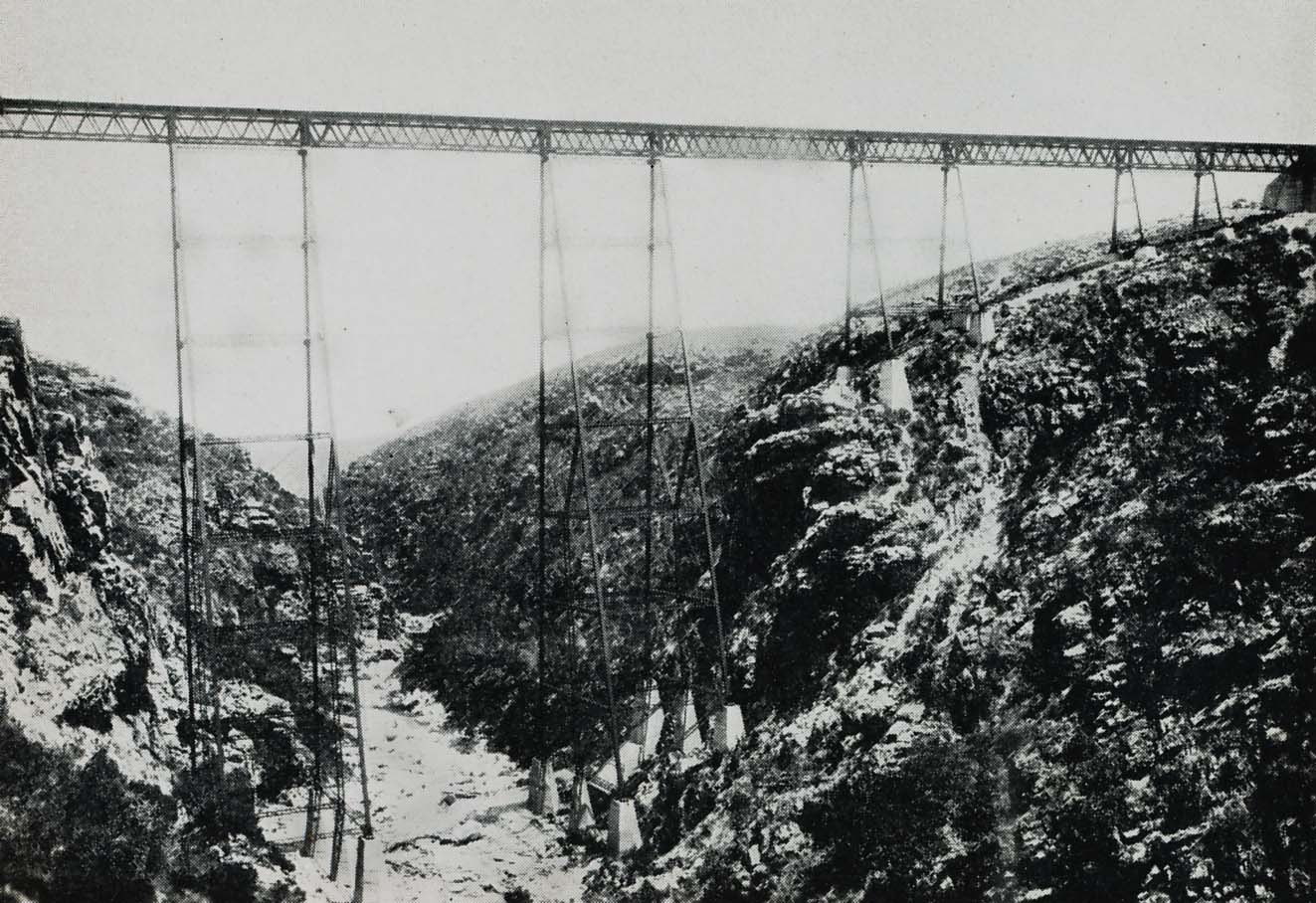
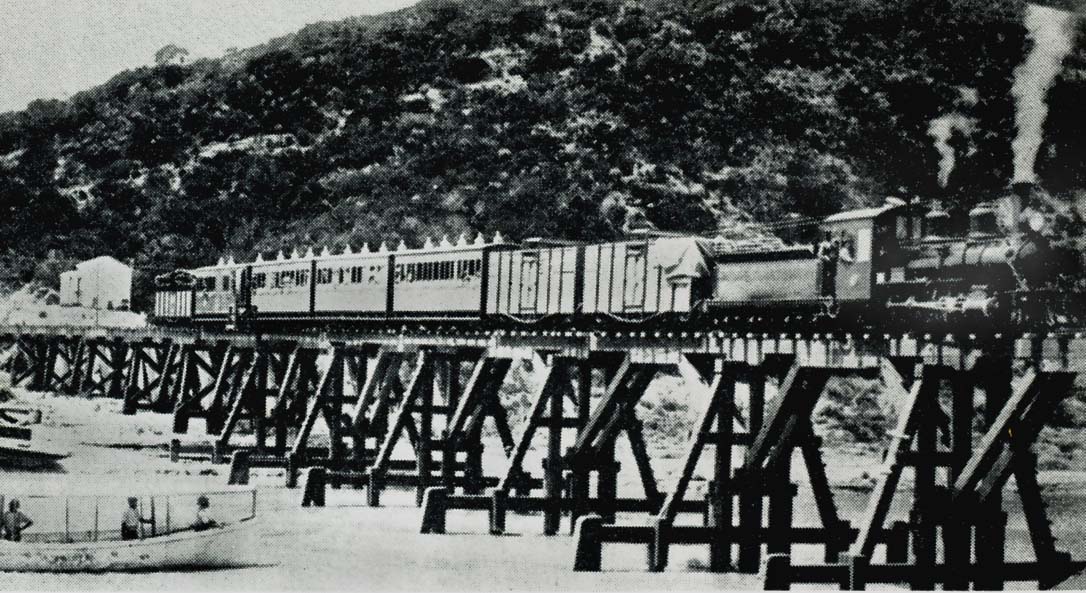
The Eastern Cape is home to the longest ‘narrow-gauge’ (610mm gauge) branch in South Africa. This is the 446 km Port Elizabeth – Avontuur branch, opened between 1906 and 1907. An additional branch from Gamtoos to Patentie was opened in 1914. These narrow gauge lines are generally known as the Apple Express, in partial operation today and it crosses the Van Stadens River on the highest steel railway bridge in South Africa.
Photo: Van Stadens Bridge shortly after construction – 77 metres above river
Photo: Early train at Gamtoos, on Avontuur branch
Unfortunately, a number of railway lines in the Eastern Cape have ceased operations in recent years. This includes the Klipplaat to Rosmead line over the famous Lootsberg Pass and the Rosmead – Stormberg section. The Barkly East, Maclear, Alexandria, Port Alfred and Somesert East branches are also not operated although they are intact. Several other branches have been uplifted, including the Seymour branch, the Qamata and Tarkastad branches as well as the Jamestown and Hofmeyr branches.
|