Fruit & Vegetable Production & Processing Introduction
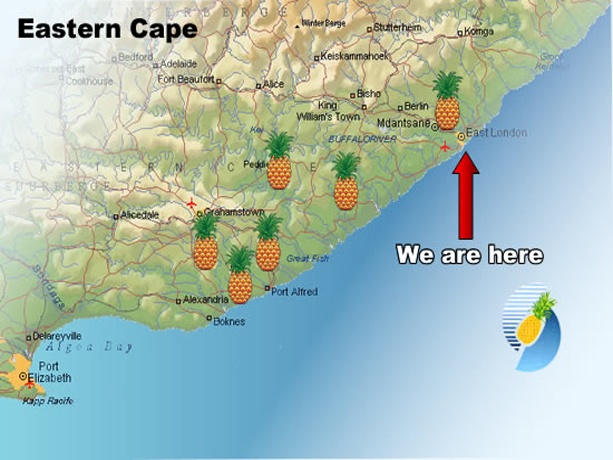
Horticultural crops, particularly vegetables are produced throughout South Africa. However, the following areas are very important for specific crops. The south-western and southern regions of the Western Cape for deciduous fruit, grapes, wine and vegetables. The low lying, sub-tropical areas of Mpumalanga and the Northern Province for sub-tropical crops, citrus and vegetables. The lower reaches of river valleys of the Eastern Cape for citrus, chicory, pineapples and vegetables. The Eastern Cape is already a major South African producer of pineapples, citrus and deciduous fruit, tomatoes, chicory and tea.
In terms of the value of production, the subtropical fruit industry earned R1 497 million in 2005/06—an increase of 3,9 % on the 2004/05 figure of R1 441 million. The cultivation of some types of subtropical fruit is only possible in certain specific areas of the country because of particular climatic requirements. In general, subtropical fruit types require warmer conditions and are sensitive to large temperature fluctuations and to frost. Therefore fruit types such as granadillas and guavas are grown in the Western Cape, while pineapples are cultivated in the Eastern Cape and KwaZulu-Natal.
South Africa is the second largest producer of chicory, after France. Chicory is grown exclusively in the coastal areas around Alexandria, where a drying plant is situated. The chicory industry is a major employer in this agricultural area. The chicory is all consumed in South Africa and sold to coffee manufactures nationwide.
The Eastern Cape is well known for its production of pineapples. The pineapple industry is a seasonal one, with the period between March and November being busy. 75% of South Africa’s pineapples are grown in the coastal belt between Port Alfred and East London and more than 90% of the canned pineapples are processed in the province. The Bathurst area alone delivers over 135 000 tons annually to the factory in East London.
A prominent company owned by the Growers, is South Africa's largest single fruit processor, and the premium pineapple processor of the Southern Hemisphere. The company processes 75% of South African pineapple and supplies 90% of canned pineapple consumed in South Africa. In addition more than one million cases are exported to 25 countries around the world including Argentina, Austria, Canary Islands, Chile, Germany, Israel, New Zealand, other countries in Southern Africa, Spain, Switzerland, United Kingdom and United States of America.
The East London area has become one of the prime tomatoes producing area in South Africa. In the year 2000, approximately 32 000 tons of tomatoes were grown in this area, representing 11% of the national production.
The Langkloof area near Joubertina is a major production area for apples, apricots and other deciduous fruit. Deciduous fruit traffic, largely in the form of apples, is currently taken by road to either Port Elizabeth or Cape Town for export. In 2005/06, the total South African apple production was estimated at 638,150 tons of which 266,413 was exported and 165,725 tons was processed. Approximately 70% of the crop is normally destined for the fresh apple market.
The citrus industry in the Eastern Cape is centred around three areas, namely the Eastern Cape Midlands, Sunday River Valley and Patensie in the Gamtoos Valley. Seasonal citrus traffic, mainly for export, is sourced from the Kirkwood and Gamtoos Valley area near Patentie. The table below illustrates the main producing regions in Southern Africa.
Table 2
From a humble beginning in the Western Cape at the turn of the last century, the South African Fruit & Vegetable Canning Industry has developed into an internationally reknown business.
The South African Canning Industry consists of three main facets, namely:
a. Deciduous Fruit Canners – based in the Western Cape and mainly export orientated. b. Pineapple Canners – based in the Eastern Cape and mainly export orientated. c. Vegetable Canners – based in various parts of the country with sales focused on the domestic market and sub-Saharan Africa.
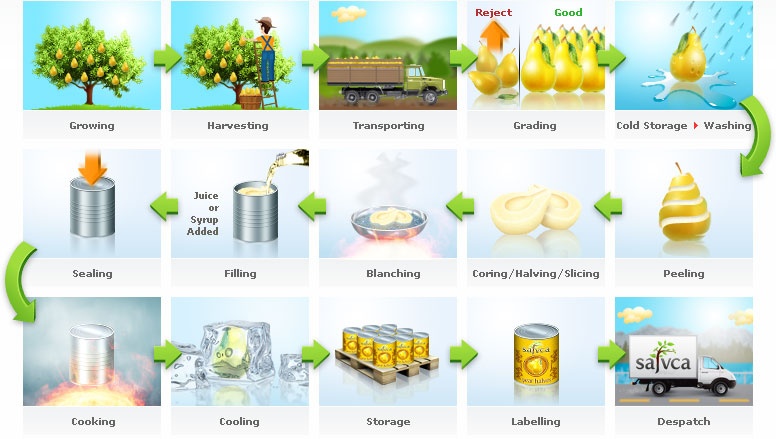
Below is an illustration of the fruit canning processing.
Volumes – Annual Tonnages
The pineapple industry produces about 200 000 tons of different products which are distributed nationally as well as exported. Over 100 000 tons of citrus products mainly oranges, are exported from Port Elizabeth in addition to 75 000 tons of apples.
Transport Mode
Road transport is used to move most fruit products for local consumption within the province, as well as nationally. Rail is used for export citrus from the Kirkwood area and until recently, from Patentie. The latter traffic is now on road, as well as the apple traffic from the Langkloof.
Statistics Eastern Cape Main crop and share in SA production Citrus producing regions of Southern Africa
| ||||||||||||||||||||||||||||||||||||||||||||||||||||||||||||||||||||||||