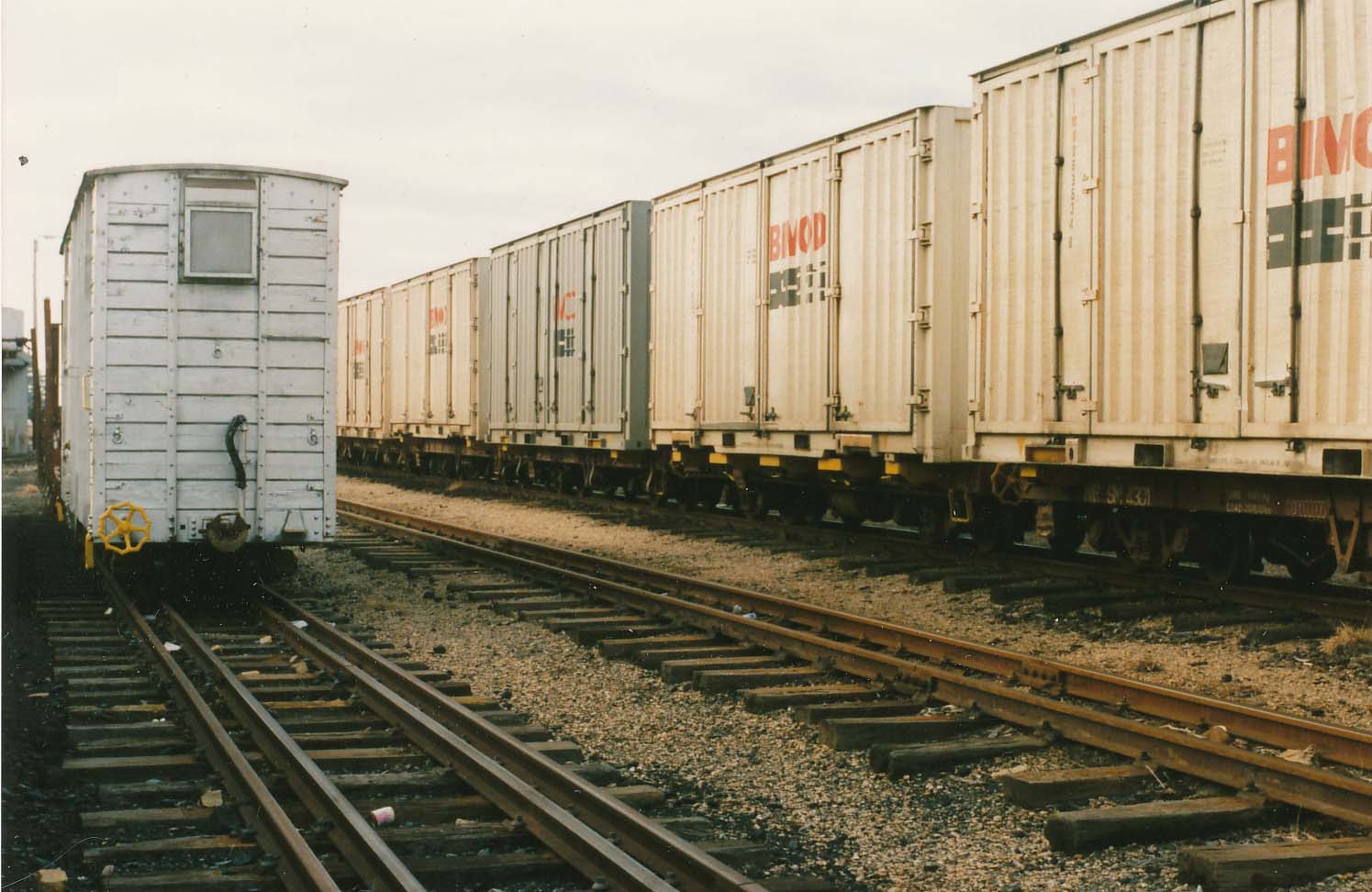
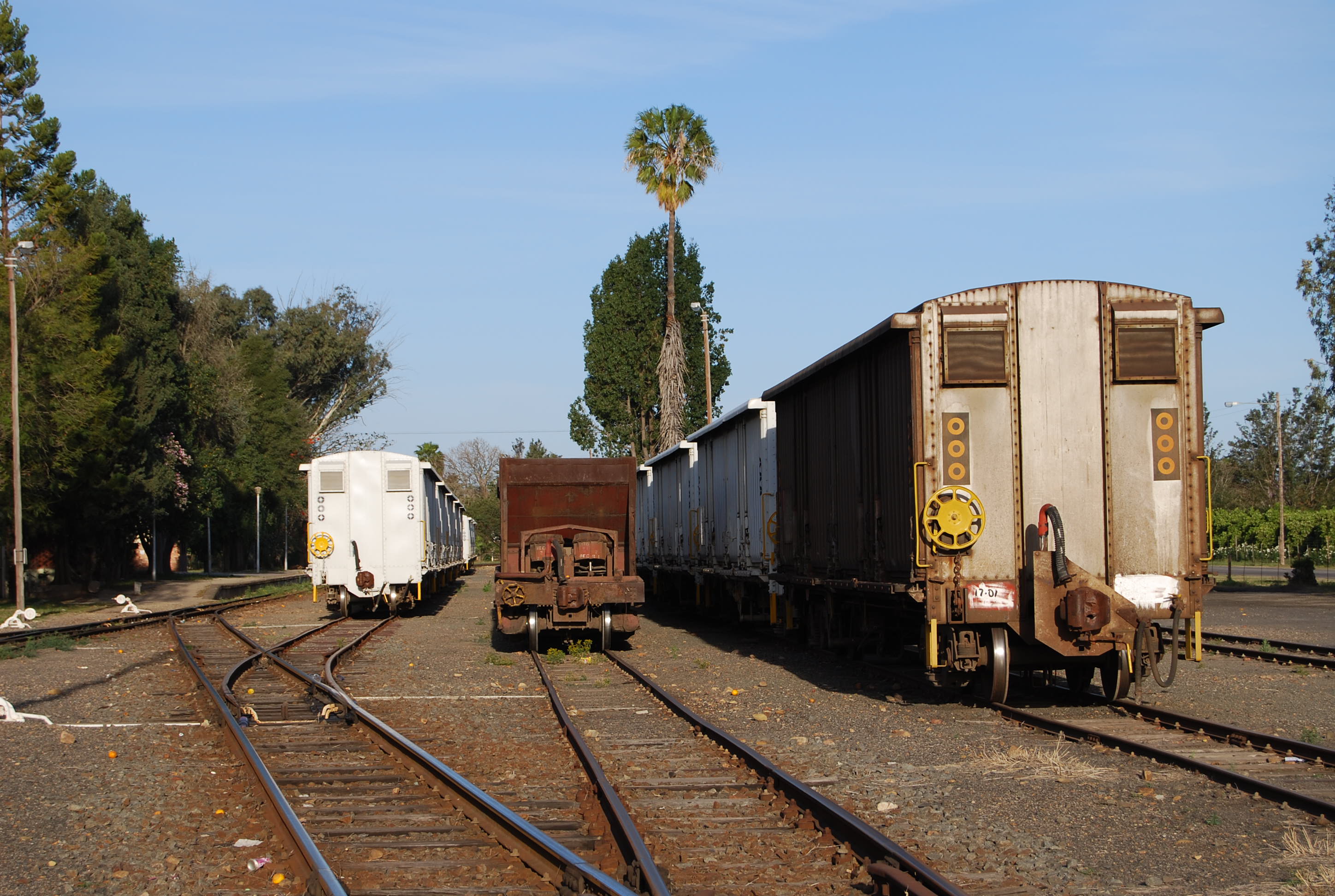
Branch Lines Rural Branch and light traffic density arterial lines Many branch lines have closed in the Eastern Cape. Those still operating include the narrow gauge Avontuur line, which is currently open along part of the route, as well as to Patentie, from where citrus traffic is railed for export to Port Elizabeth. The Addo – Kirkwood branch serves the local citrus farms as well and export traffic is railed during the four month annual harvesting season. Other branches to Alexandria, Calitzdorp, Somerset East, and Hofmeyr have been closed. The Port Alfred branch is currently operating a passenger service to Grahamstown but there is no freight traffic on this section. There were several branches near and along the East London main line and those to Seymour, Tarkastad, Qamata, and Jamestown have all been closed and uplifted. The branches to Barkly East and Maclear are intact but not in operation. Finally, the Amabele – Mthatha branch, after being closed for several years, has been re-opened by the Eastern Cape government and is being operated as Kei Rail. This experiment could pave the way for further branches to be re-opened. Port Elizabeth– Avontuur and Patentie Narrow Gauge As the last operating 610mm ‘narrow-gauge’ commercial freight railway in South Africa, this branch is unique. It was opened between 1905 and 1907 but the railway administration attempted to close the line in the mid-1980’s as being ‘uneconomic’ but efforts were made by local communities to keep it open. Mainstay traffic on the line included limestone from Loerie and deciduous fruit traffic from the Langkloof to Port Elizabeth for export. The limestone traffic finished with the closure of the quarry in 2004 while in spite of efforts, the apple traffic has gone to road, but much of this traffic is now routed to Cape Town, rather than Port Elizabeth. Seasonal citrus traffic from the Patentie branch is still on rail, as is timber traffic from Assegaibos. The 446 km line has a 1 in 30 ruling gradient and there is an 11,5 ton axle load restriction – typical of such a narrow gauge line. Train control is by radio. The section between Misgund and Avontuur has no regular freight service by occasional special tourist trains have run during the fast few years. Photo: Old and new. Old narrow-body wagon at left, compared to wagons loaded with 2.4 meter wide, 7.5m long containers
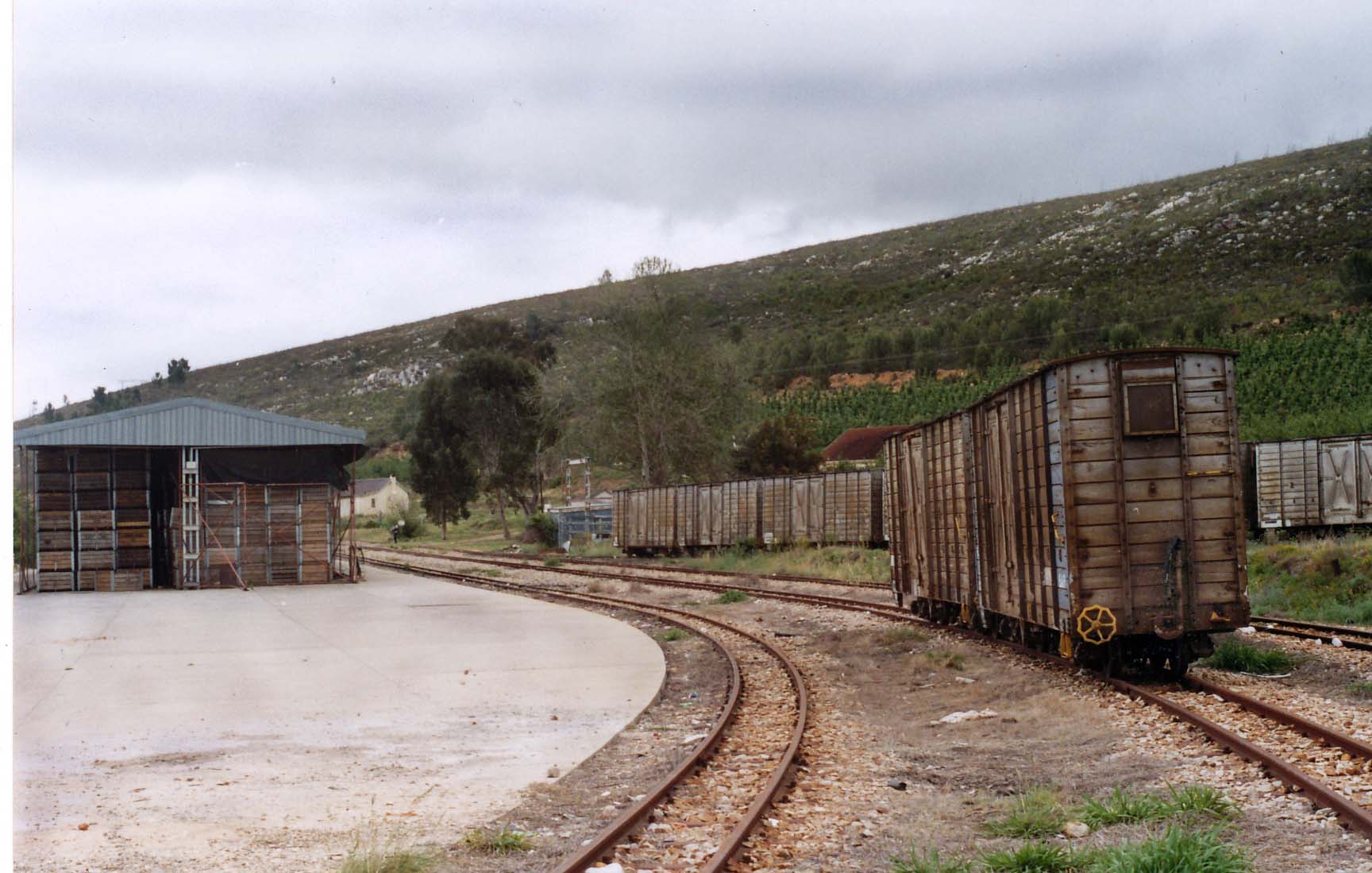
Photo: Rural scene with fruit shed and wagons for carrying apples (Misgund)
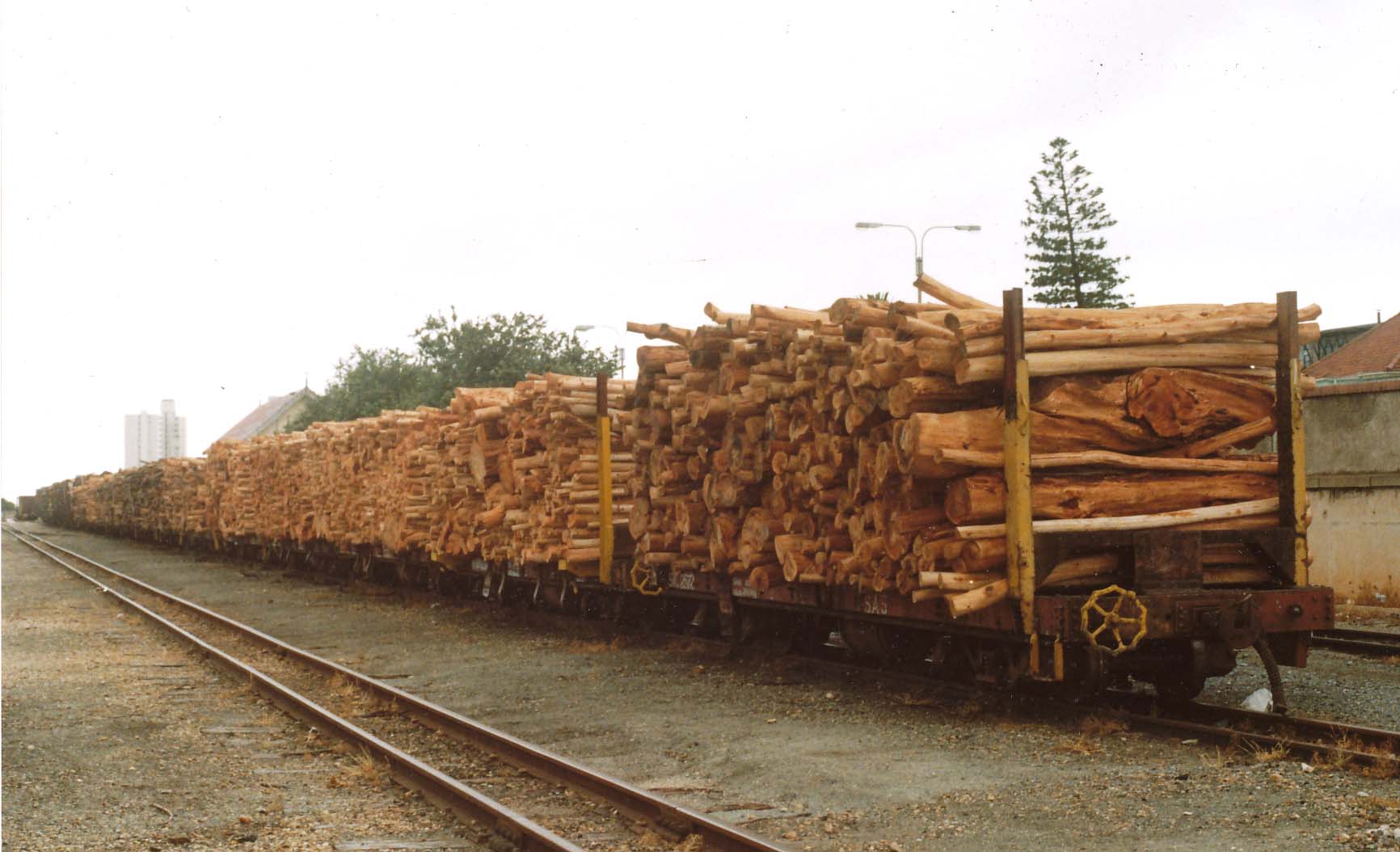
Photo: Train loaded with wattle loaded at Assegaibos (Wattle train Humewood)
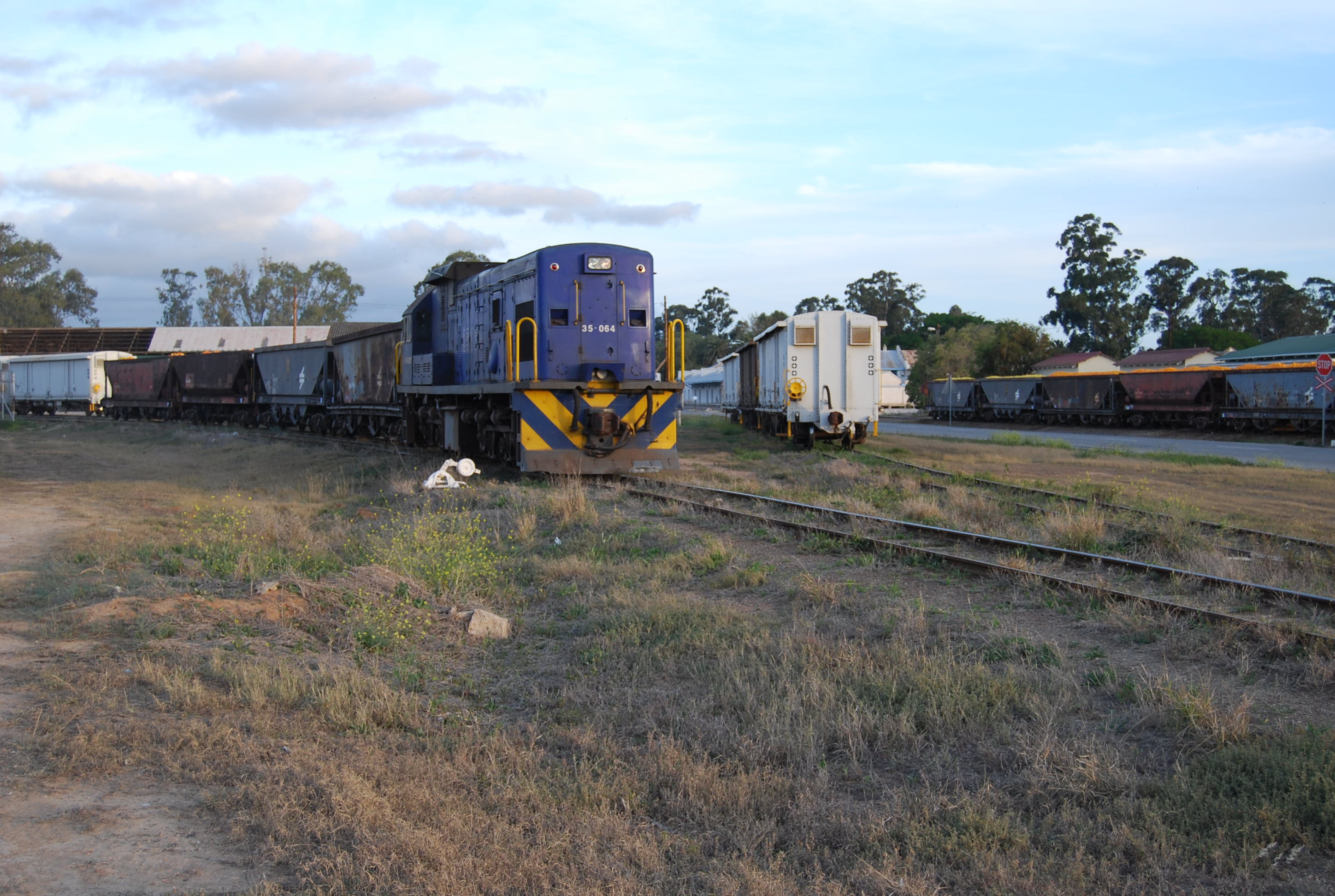
There is an opportunity to generate new business and agricultural opportunities in the Langkloof and Hankey Valley. Products such as cement, fertiliser and grain could be re-gained to rail but this will depend on the cost of road transport in the future. Addo – Kirkwood branch Traffic on this branch which was opened in 1927, and is now only seasonal, consists mainly of citrus traffic for export. Some 59 000 tons of citrus was generated on the branch during 2005 – 2006, all destined to New Brighton and Algoa Bay (Port Elizabeth) for export. A small amount of lime and fertiliser was received. The branch is 33 km in length and has a 1 in 66 maximum permissible axle load. Train control is by Radio Train Order and up to two trains are run daily during the peak season during August to September. Photo: Loco shunting train at Hermitage
Photo: Refurbished OLJ wagons for palletised fruit
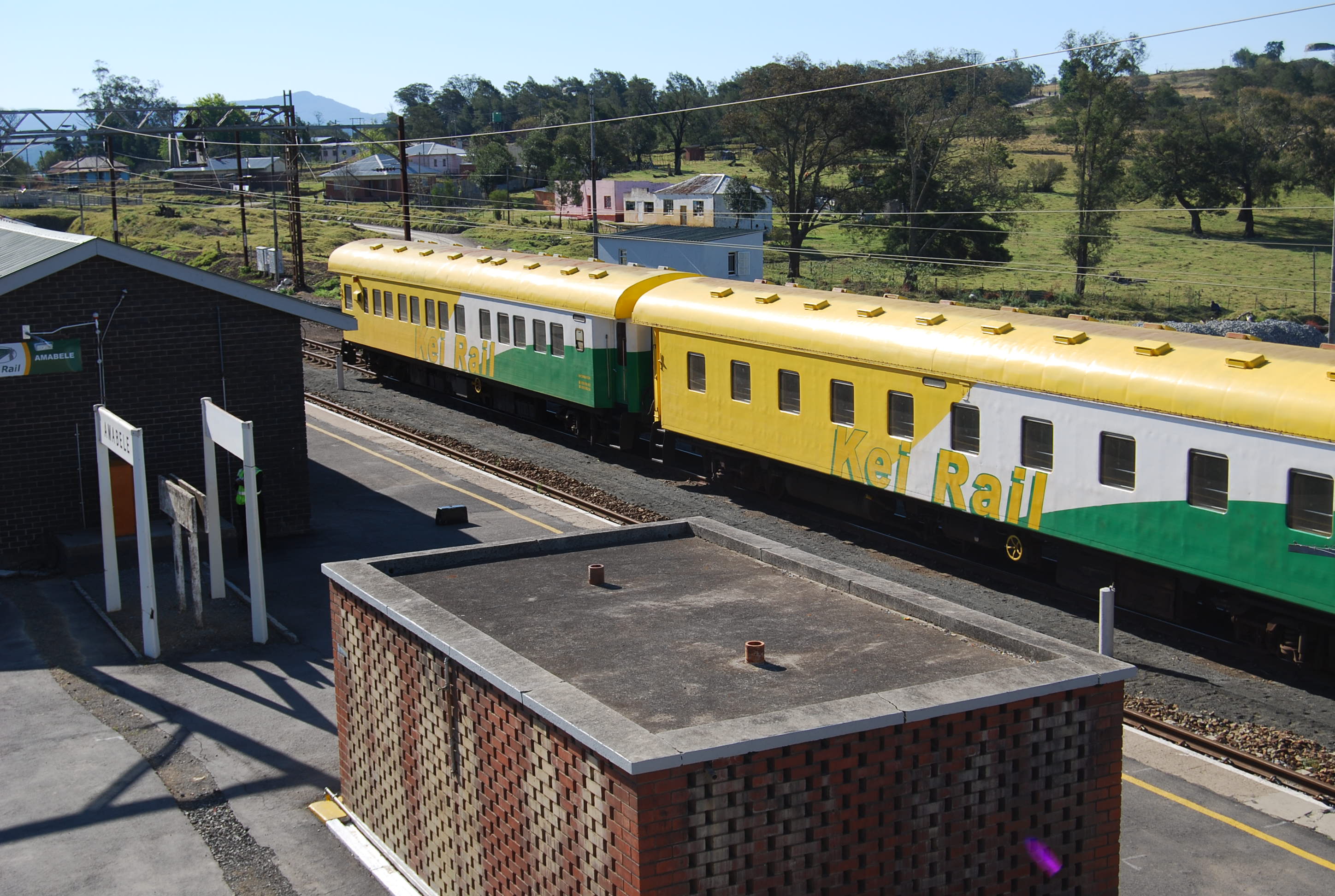
Barkly Bridge – Alexandria branch Opened in 1909, this 87 kilometre branch was closed during the early 1990’s but it is still intact. The main traffic on the line was agricultural and related to the chicory industry in the Alexandria area. Fertiliser and general freight traffic was also carried. The line has a 16 ton axle load restriction, which was not at the time a problem for the traffic carried. Any possible re-opening of this branch will depend on whether it is offered to private interests and if the community would support such an operation. The fact that the branch is closely paralleled by a main tar makes it unlikely that a re-opening will occur. Alicedale – Grahamstown – Port Alfred Branch This is one of the earliest branch lines in South Africa, having been opened from Alicedale to Grahamstown in 1879. It was extended to Port Alfred by a private company in 1884 but was acquired by the government in 1913. Although 126 km in length, only the 56 km Alicedale – Grahamstown section is currently in use. During 2005 – 2006 there was virtually no freight traffic – only a regular passenger train being operated. During 1999 – 2000 gypsum and timber traffic was moved from the line while coal, grain, lime and fertiliser were received. The reasons for the loss of this traffic must be investigated and if possible, the traffic must be regained. The line has a 16 ton wagon axle load restriction, while the ruling gradient is 1 in 30. Train control is by Radio Train Order. The section to Port Alfred has not been used for several years although it is intact. A tourist passenger operation was initiated on the 15-km Port Alfred – Bathurst section. Cookhouse – Somerset East branch This is another branch line which has not been operated since the early 1990’s. It was opened in 1902 and is 31 km in length and paralleled by a tar road, although the railway is at a distance from the road in most places and could serve the farming community once again. The branch has a 15 ton axle load which limits wagon payloads to as little as 40 tons – not considered economic by the railway administration at this time. Amabele – Mthatha (Umtata) branch This branch was in the past an important route to the former Transkei. Branching off the East London mainline at Amabele, it was opened between 1904 and 1916 and ran 282 kilometres to Umtata (now Mthatha). Through passenger and freight trains ran from East London, a distance of 358 km. Services were suspended after the year 2000 as a result of years of declining traffic. At the time, liquid fuel traffic constituted about 34% of total inbound traffic, while domestic coal 14% and grains about 23%. Outbound traffic included timber which was about 34% of the total. At the time 2 – 3 trains were run in each direction but the line was allowed to deteriorate to the point were safe operations became a matter of concern. At the same time, the industrial development area of Butterworth was degraded as the local textile industry became uncompetitive with imported goods. The line has been the subject of studies by the Eastern Cape government who have been anxious to resuscitate operations. The condition of the line has been evaluated and funds made available to make necessary repairs. Since the National Railway Administrations has indicated its lack of interest, the Eastern Cape Government has take over the line and it expects to resume operations later in 2006. Passenger services will begin at first and freight later. Photo: Kei Rail coaches at Amabele
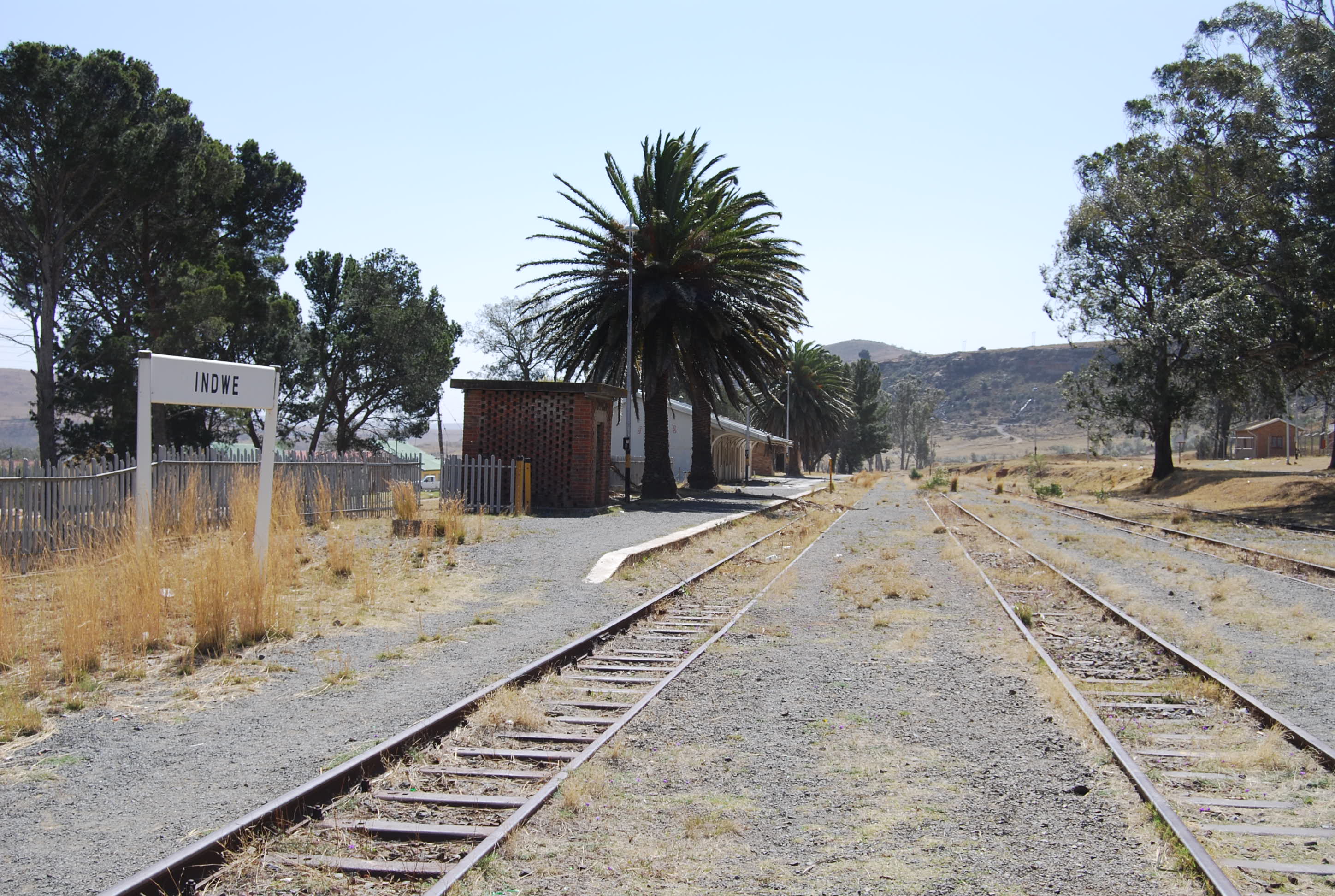
The line has a ruling gradient of 1 in 40 and a 18,5 ton permissible axle load. It is single track and operations were formerly by the Van Schoor tablet system. There is definitely a good possibility that freight traffic can be regained but it will not be easy to convince former users that the new operators will overcome the challenges that the former operators walked away from. Sterkstroom – Maclear branch At 417 kilometres, this is one of the longest branch lines in South Africa. It was originally opened to Indwe in 1896 to exploit coal deposits in the area. The line was extended to Maclear in 1906 and plans were made to extend it to Natal and link up with the line from Pietermaritzburg. But this was not to be and the branch was to become an agricultural line. As late as the year 2000 train services handled general traffic, grains, fertiliser, timber and livestock. Services were suspended shortly thereafter as the line had deteriorated as a result of a lack of maintenance. The branch had a 16 ton permissible axle load and a 1 in 33 Compensated grade. In its last years of operation the Wooden Train Staff system was used. Little though appears to have been given to the possible re-opening of this branch, in spite of the fact that it runs through the huge forest plantation area from Elliot to Ugie and Maclear. A pressed-wood factory is being established at Ugie and promoters of the Mthatha branch re-opening have thought that this new traffic would be taken by road to near Mthatha and transferred to rail. No thought appears to have been given to resuscitating the Maclear branch. This is a matter for concern. Photo: Disused Indwe station and overgrown railway lines
Dreunberg – Aliwal North (and Sannaspos) line This is the section of the line to Sannaspos which falls within the Eastern Cape. Across the Gariep (Orange) River at Aliwal North, the line is in the Free State and services have been suspended at the north end due to a wash away in the Wepener area. The line is 311 km in length but the distance between Dreunberg and Aliwal North is only 53 km, although trains operate from Burgersdorp, 7 km to the south. Opened in 1885 to Aliwal North, the extension north was opened in sections between 1911 and 1916. As a typical rural agricultural line, train services included a daily through passenger train, while additional passenger accommodation was provided on local goods trains, known at ‘Mixed Trains.’ By the year 2000 the passenger train had been eliminated but two Mixed trains still ran each day. Traffic had declined as general freight was lost to road. Only bulk maize and wheat remained. With the exception of Aliwal North, even this has largely gone to road, particularly after the closure of a portion of the line. Traffic during 2005 – 2006 consisted of some 40 000 tons of grain maize to one private siding owner at Aliwal North. Services are provided as required by a haulier train from Burgersdorp. Until the entire line is reopened no increase in traffic will be possible. The line has a 1 in 66 Compensated ruling grade and an axle load restriction of 16 tons. Train control is by the Radio Train Operating system. Aliwal North – Barkly East branch This is yet another branch line that is not in operation, although it is intact. A unique line, due to the fact that there are eight reversing stations in two areas along the line, it has never been anything but a light traffic density rural line. Opened to Lady Grey in 1906, it was extended to Barkly East by 1930, a total distance of 97 km. Traffic consisted of agricultural products, livestock and general freight – all which has gone to road since transport deregulation. The line, including the Dreunberg – Aliwal North section was taken over on a concession arrangement by a private operator in the late 1980’s who saw the line as having tourist potential. An unfortunate accident resulted in a loss of life and the company was subsequently liquidated. It is unlikely that services will ever resume on the line, although the section to Aliwal North should continue to provide services. A thorough evaluation of future growth potential should be undertaken as a matter of urgency. Photo: Steam tourist train at Lady Grey
Branches Uplifted Fort Beaufort – Seymour (Uplifted) A 55 km branch which served agricultural development in the Katberg area. Citrus traffic was the mainstay of this branch before its closure. Imvani – Qamata A 43 km branch which acted as a feeder line for various areas in the former Transkei. With transportation deregulation, traffic was lost to direct road. Bowkers Park– Tarkastad This 52 km branch served an agricultural area to the north west of Queenstown but transport deregulation resulted in the major loss of livestock and other agricultural traffic. Molteno – Jamestown A 67 km branch opened in 1931 to serve a stock farming area. Schoombee – Hofmeyr This 50 km branch served an agricultural and stock raising area but transport deregulation resulted in its loss of traffic. Statistics |