Automative Related Introduction
The Eastern Cape is known as the “Detroit” of South Africa because of its coastal location, which allows for the easy access to global networks. The auto industry in the Eastern Cape is of national importance. Around 40% of South African car sales and 60% of car exports by unit are produced in the Eastern Cape. When the components industry is included, 26% of South African auto sector value added and 30% of employment is provided by the Eastern Cape Province.
Collective employment in the vehicle manufacturing industry currently amounts to more than 38 500 persons, while employment in the components manufacturing industry is about 78 000 employees. The total employment in the trade area, such as vehicle sales, maintenance, and replacement parts, currently amounts to about 198 000 persons.
Over 5000 people are directly employed in the catalytic converter industry (monolith production, PGM coating and converter production). The industry‘s investments in land, buildings, plant and equipment is well over R2 billion to date. Port Elizabeth is the hub of the converter industry and is host to many of the major international players.
Products
Total turnover of the entire component manufacturing sector, excluding duplication, is estimated at R65 billion (up from R56,5 billion in 2007 and R47,5 billion in 2005), including: tyre manufacturers, catalytic converters not included in NAACAM data and non-affiliated suppliers, making it a 2% contributor to South Africa’s gross domestic product. The automotive components manufacturers comprise companies that span a vast range of sectors, such as the rubber, plastics, glass, and metals sectors. The key exports include catalytic convertors, parts, engines, silencers and exhausts, radiators, wheels and tyres, stitched leather car seat covers, car radios and sound systems, axles, especially for heavy trucks,etc.
Catalytic converters
The catalytic converter manufacturing industry in South Africa is the biggest contributor to the automotive component export sector, which has been so successfully stimulated by the Motor Industry Development Program (MIDP). South Africa has a 14% market share in the global catalytic converter manufacturing industry. The catalytic converter industry currently exports millions of converters a year, with a total value of more than R15.8 billion in 2006 compared to R 9.9 billion in 2005, with the 2007 figure likely to be around R20 million. Leather seats and parts are the second most exported automotive component in South Africa amounting to R2.5 billion in 2006 followed by tyres and engines both with R1.2 billion.
Where the Catalytic Converter programme is concerned, South Africa has become the centre of excellence for catalytic converter production with Canners using the latest hot and cold rolled technology. Thousands of indirect jobs have been created within the Port Elizabeth region as a result of the growth in the catalytic converter industry. Ford alone exports in excess of 1.8 million catalytic converters to Europe (90% of European requirement) and the United States. The industry is the biggest consumer of stainless steel in South Africa utilizing approximately 60 000 tons per annum.
Tyres
Bridgestone/Firestone, Goodyear and General Tyres, all based in the Nelson Mandela Metropolitan Municipality (Port Elizabeth, Uitenhage and Despatch), produce much of the tyres and tubes for the auto industry. According to engineering news, between 50 000 and 60 000 Mt of natural rubber is consumed in South Africa yearly, the bulk of which is within the tyre industry. About 40% of all tyres produced here are exported – mainly to Europe and Central and North Africa. The majority of South Africa’s raw-material rubber requirements are imported from high-rainfall countries, such as Malaysia, with only one local synthetic-rubber producer in South Africa. The tyres are loaded as is the case with other automotive components, into containers for the export market and the raw materials received are also housed in containers. The tyre plant situated in New Brighton producers annually approximately 36 000 tons of tyres for the South Africa market.
The plant based in Uitenhage receives approximately 170 000 tons of raw materials through the Port of Port Elizabeth. It includes oils from Durban, carbon black form Algorax in PE, powder from Europe, natural rubber from Indonesia and synthetic rubber from Akron, Ohio.
Volumes
Locally assembled vehicles and manufactured automotive components were exported to over 100 countries in 2006. Overall, Europe remains the automotive industry’s main trading partner, followed by Japan, the US, the UK and Australia. The European Union accounts for almost 70% of component exports in terms of value, while the US, Japan and Australia are the top three destinations for passenger cars. Germany, Spain, the UK, the US, France, and sub-Saharan Africa are the leading destinations for automotive components. In 2003, an estimated 793,500 units of commercial tyres were sold in South Africa. The total turnover of the current tyre industry for 2008 is estimated at R5 billion.
Statistics Developments
There are seven new investors in the new Automobile Supplier Park at the East London Industrial Development Zone in the Eastern Cape, They will inject R395-million into the industrial development zone (IDZ), bringing the total investment to R755-million since its inception. It was estimated that one of the new plant with an investment of R116-million aims to manufacture around 4.5-million aluminium suspension struts in 2008, with some 80% of the parts destined for the export market. The plant is four kilometres away from the East London harbour and less than a kilometre from DaimlerChrysler South Africa, which will take up 20% of production for the new Mercedes Benz C-Class model.
Transportation
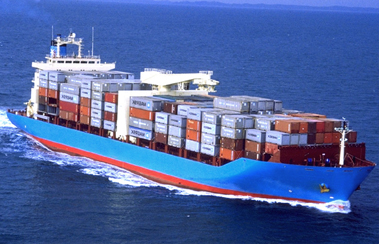
In South Africa, the import and export of automotive components are loaded into containers, which are then shipped either to or from South Africa. Once received in South Africa, the containers are transferred onto rail or road for its final destination.
Statistics for Export Data For Components
|